
How Much Does a Home Renovation Cost in Maidstone?
Renovating your home is one of the most rewarding investments you can make in your property, but it’s also one of the hardest to budget for accurately. Unlike an extension where the scope is relatively defined — you’re building a new room of a known size — a renovation can mean anything from refreshing a single bathroom to gutting an entire house and rebuilding it from the inside out. The cost depends entirely on what you’re doing, how much of the property is affected, the condition of what’s behind the walls and under the floors, and the specification you choose for the finished result.
This guide sets out realistic renovation costs for different types of project across Maidstone, explains what drives the price at each level, and helps you set a practical budget before you start talking to builders.
Room-by-Room Renovation Costs
Most renovations start with a specific room or area rather than the whole house. Understanding individual room costs helps you prioritise where to spend and build a phased plan if the full budget isn’t available immediately.
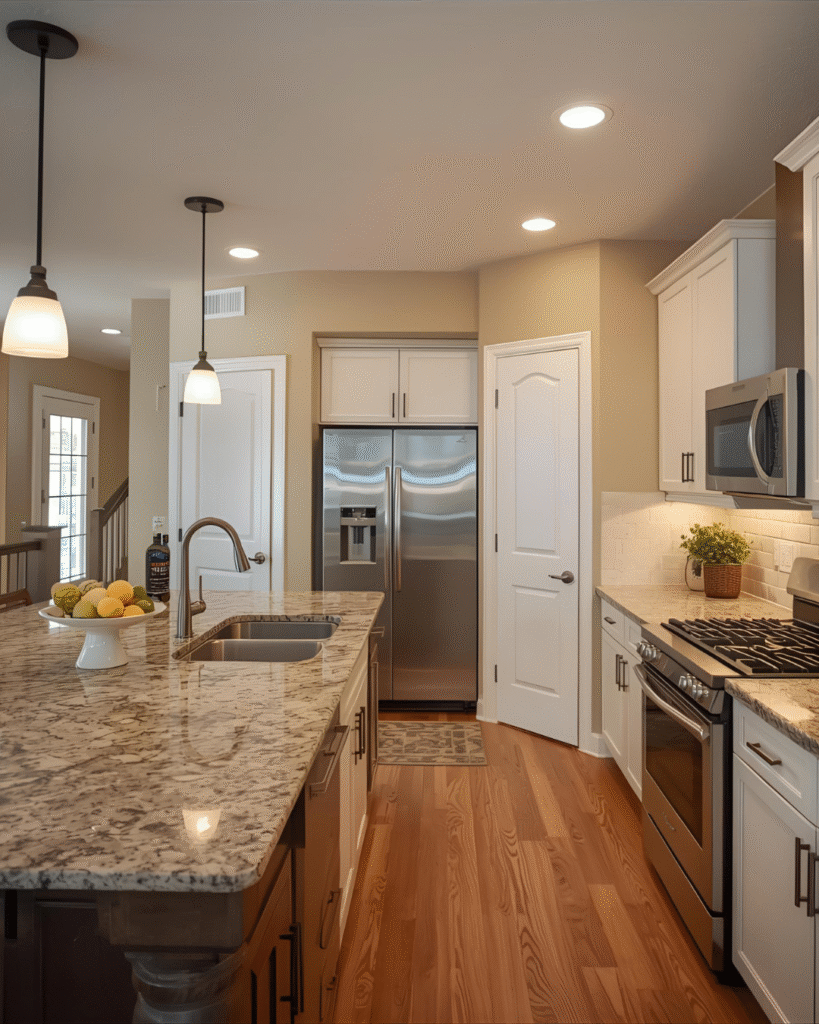
Kitchen renovations represent the widest cost range because the specification options are so broad. A straightforward kitchen replacement — new units, worktops, tiling, flooring, and decoration in the existing layout with no structural changes — typically costs between £8,000 and £15,000 depending on the quality of the kitchen you choose. A mid-range renovation that includes layout changes, replastering, new electrics with dedicated appliance circuits, plumbing modifications, and quality finishing typically falls between £15,000 and £25,000. A high-end kitchen renovation involving structural wall removal with steelwork, a fully fitted kitchen with stone worktops, underfloor heating, premium appliances, and comprehensive finishing can reach £25,000 to £40,000 or more. The kitchen supplier you choose has a significant impact — units from Howdens or Wren at the practical end, bespoke or German kitchens at the premium end.
Bathroom renovations are more contained in scope but still vary considerably with specification. A basic suite replacement with new tiling and freshened decoration costs between £3,000 and £6,000. A full bathroom renovation with layout changes, new plumbing runs, complete retiling, quality sanitaryware, heated towel rail, and proper waterproofing throughout typically costs £6,000 to £12,000. A high-specification bathroom or wet room with designer fittings, large-format tiling, underfloor heating, and premium finishing can reach £12,000 to £20,000. Ensuite bathrooms generally cost less than family bathrooms simply because of the smaller footprint, typically falling between £4,000 and £10,000 depending on specification.
Living room and bedroom renovations are primarily cosmetic unless structural work is involved. Replastering, new electrics, flooring, and decoration for a single room typically costs between £2,000 and £5,000. If the renovation includes removing a chimney breast, installing a feature fireplace, or structural alterations to open up the space, the cost increases to £4,000 to £8,000 depending on the complexity of the structural work and the extent of making good required.
Hallway, stairs, and landing renovations are often underestimated because the area is spread across multiple floors. Replastering, new electrics, staircase refurbishment or replacement, flooring, and decoration throughout typically costs between £3,000 and £8,000. A full staircase replacement with a contemporary design can add £3,000 to £6,000 on top depending on the specification and complexity.
Whole-House Renovation Costs
When the house renovation covers the entire property, costs scale significantly but the per-room cost often decreases because trades are already on site and the work flows more efficiently than tackling rooms individually over separate projects.
A light renovation — redecoration throughout, new flooring, updated bathroom suite, refreshed kitchen without structural changes, and minor repairs — typically costs between £15,000 and £30,000 for a standard three bedroom semi in Maidstone. This level of work suits a property that’s structurally sound but cosmetically tired and in need of modernising.
A medium renovation — replastering throughout, new electrics, updated plumbing, new kitchen with layout changes, new bathroom, flooring, and decoration — typically costs between £30,000 and £60,000. This is the most common level of whole-house renovation we carry out across Maidstone, covering properties in areas like Bearsted, Loose, Penenden Heath, and the established housing around the town centre that need comprehensive updating but don’t require structural transformation.
A comprehensive renovation — structural alterations to reconfigure the layout, full rewiring, complete replumbing, new kitchen, new bathrooms, plastering throughout, new flooring, full decoration, and potentially new heating systems — typically costs between £60,000 and £120,000 or more depending on the size of the property and the specification. This level suits properties that need everything doing — the kind of project where you strip the house back to the structure and rebuild the interior entirely. Period properties around Maidstone’s older streets, renovation projects in the surrounding villages, and properties purchased specifically to transform fall into this bracket.
These figures cover the building work, materials, and finishing but typically exclude kitchen units and appliances, bathroom sanitaryware, and furniture. They also exclude any external work such as roofing, windows, or fascias, which are separate costs if needed.
What Affects Renovation Costs in Maidstone?
Several factors specific to your property and the local area influence what your renovation will cost beyond the basic scope of work.
Property age and construction have a significant impact. Maidstone’s housing stock ranges from medieval timber-framed buildings in the town centre through Georgian and Victorian properties to the inter-war estates in Shepway and Parkwood, the post-war housing in Grove Green and Vinters Park, and modern developments on the outskirts. Each construction type presents different challenges. Older properties with lath and plaster walls, lime mortar, and non-standard construction methods take longer to work with and require more specialist knowledge than modern plasterboard and block construction. Victorian properties around the town centre and through Tovil often reveal surprises once work begins — undersized joists, previous modifications done without proper support, damp that’s spread further than visible, and services that have been modified repeatedly over decades.
The condition of what’s hidden is the biggest variable in any renovation budget. A property that looks tired but is structurally sound and has serviceable plumbing and electrics costs far less to renovate than one where every service needs replacing and structural defects emerge once the surfaces come off. Until your builder opens up the walls and lifts the floors, the exact condition remains partially unknown. An experienced builder assesses the likely condition based on the property’s age, construction type, and visible indicators, but some uncertainty always exists until work is underway.
The specification you choose for finished elements has the most direct impact on the final cost. Kitchen units, worktops, bathroom sanitaryware, tiles, flooring, and fixtures can vary from budget to premium within the same room layout, and the difference in material cost alone can be thousands of pounds. A bathroom tiled in standard ceramic tiles costs significantly less than one finished in large-format porcelain or natural stone. A laminate worktop costs a fraction of a quartz or granite surface. These are choices you control, and being clear about your specification priorities helps your builder produce an accurate quote.
Access and logistics affect labour costs on properties where getting materials in and waste out is difficult. Terraced houses with no side access, properties on Maidstone’s steeper streets, and flats above commercial premises on the High Street or surrounding roads all present access challenges that add time and labour to the project compared to a semi-detached house with clear side access and a driveway.
Planning Your Renovation Budget
The most effective way to manage renovation costs is to plan the specification thoroughly before work starts and build in a realistic contingency for the unexpected.
Set your priorities clearly. Identify which rooms matter most and allocate budget accordingly. Most homeowners prioritise the kitchen and bathroom because these rooms make the biggest difference to daily life and add the most value to the property. Bedrooms and living spaces can often be refreshed to a good standard for less because the work is primarily cosmetic.
Decide on specification levels before getting quotes. Knowing whether you want a mid-range kitchen or a premium one, standard bathroom fittings or designer sanitaryware, engineered wood flooring or laminate throughout — these decisions shape the quote fundamentally. If you ask three builders to quote without specifying what you want, you’ll get three prices based on three different assumptions, making comparison meaningless.
Build in a contingency of ten to fifteen percent. Renovation work on existing properties always carries a degree of uncertainty because you’re working with what previous owners and builders left behind. Plumbing that’s not where it should be, electrics that don’t meet current standards, damp that’s travelled further than the survey suggested, structural timbers that need replacing — these discoveries are normal rather than exceptional. Having a financial buffer means they’re absorbed within the budget rather than becoming a crisis that stops the project.
Consider phasing the work. If the full renovation budget isn’t available now, plan the work in phases that make practical sense. Rewiring and replumbing are best done together because both involve lifting floors and opening up walls. Kitchen and bathroom renovations follow naturally because new services are already in place. Cosmetic finishing — plastering, flooring, decoration — completes the transformation. Phasing over twelve to eighteen months spreads the cost while ensuring each stage delivers a finished, usable result rather than leaving the whole house in a half-completed state.
Getting the Best Value
Get detailed, itemised quotes from two or three builders. A single total figure with no breakdown tells you nothing about where the money is going. Itemised quotes let you compare like for like, identify where one builder has included something another has omitted, and understand the cost of each element so you can make informed decisions about specification trade-offs.
Invest in the things that matter most and longest. Quality plumbing and waterproofing in the bathroom, solid electrics throughout, a well-fitted kitchen with properly aligned doors and smooth-running drawers, and thorough plastering that provides flat, true walls for whatever finish you apply — these are the elements that determine whether the renovation still looks and feels good in five years or starts showing its weaknesses within months.
Economise where it makes sense. Decoration is the easiest and cheapest thing to change in the future, so spending less on paint and wallpaper now isn’t a compromise you’ll regret. Basic light fittings can be upgraded later without any building work. Door furniture and accessories are simple to swap out as budget allows.
Getting Started
If you’re planning a renovation at your Maidstone home — whether it’s a single room that needs attention or a complete property transformation — get in touch for a free consultation. We’ll visit, discuss what you want to achieve, assess the property honestly, and provide a detailed quote that gives you the information to make a confident decision about your project.